

How Many Animals Are Hunted And Killed Each Day
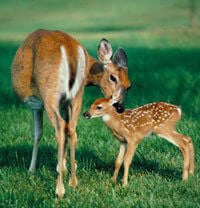
Hunting might have been necessary for homo survival in prehistoric times, simply today well-nigh hunters stalk and kill animals merely for the thrill of it, not out of necessity. This unnecessary, violent grade of "entertainment" rips animal families apart and leaves countless animals orphaned or badly injured when hunters miss their targets.
Pain and Suffering
Quick kills are rare, and many animals suffer prolonged, painful deaths when hunters severely hurt but fail to impale them.
A member of the Maine BowHunters Alliance estimates that 50 per centum of animals who are shot with crossbows are wounded but not killed. A written report of fourscore radio-collared white-tailed deer found that of the 22 deer who had been shot with "traditional archery equipment," 11 were wounded only not recovered by hunters.
A British study of deer hunting found that xi percent of deer killed by hunters died simply later on being shot two or more times and that some wounded deer suffered for more than 15 minutes before dying.
20 percent of foxes wounded by hunters are shot again; 10 per centum manage to escape, only "starvation is a probable fate" for them, according to 1 veterinarian.
Hunting too disrupts migration and hibernation patterns and destroys families. For animals such as wolves and geese, who mate for life and live in shut-knit family units, hunting tin can devastate entire communities.
The fearfulness and the inescapable, earsplitting noises from the gunfire and other mayhem that hunters create cause hunted animals to suffer tremendous stress. This severely compromises their routine and their eating habits, making information technology difficult for them to store the fatty and energy that they demand to survive the wintertime. Loud noises can also disrupt mating rituals and tin can cause parent animals to flee their dens and nests, leaving their immature vulnerable to natural predators.
Hunting as Sport and 'Fair Chase'
Hunting is often called a sport every bit a mode to pass off a cruel, needless killing spree as a socially acceptable, wholesome activity. However, sports involve competition betwixt ii consenting parties and the mediation of a referee. And no sport ends with the deliberate death of one unwilling participant.
Some hunting groups merits that by obeying laws and killing gratis-range animals in a manner that does not requite humans an "improper advantage" over their prey, the activeness constitutes "off-white chase." Of grade, these aforementioned groups encourage hunters to shoot game with rifles, shotguns, and bows and arrows—weapons that no fauna has any chance of outrunning, let lonely fighting. Furthermore, "free range" equally defined today rarely implies the vast wilderness that big game once roamed.
Nature Takes Care of Its Own
Contrary to what hunters often say in defense of their brutal pastime, hunting has zilch to do with "conservation" or "population control." In fact, animals are frequently specially bred and raised for hunters to impale.
If left unaltered by humans, the delicate balance of nature's ecosystems ensures the survival of most species. Natural predators help maintain this rest by killing only the sickest and weakest individuals.
Hunters, however, strive to impale the animals they would like to hang over the fireplace—usually the largest, near robust animals, who are needed to continue the genetic pool strong. This "bays hunting" often weakens the residual of the species' population: Elephant poaching is believed to accept increased the number of tuskless animals in Africa, and in Canada, hunting has caused the bighorn sheep'due south horn size to fall by 25 percent in the final twoscore years. Nature magazine reports that "the effect on the populations' genetics is probably deeper."
Even when unusual natural occurrences cause overpopulation, natural processes work to stabilize the group. Starvation and disease are tragic, but they are nature's way of ensuring that good for you, strong animals survive and maintain the strength of their herd or group. After hunters kill the largest members of a population, the offspring of weak adults have difficulty finding food and gaining the strength needed to survive farthermost weather condition; therefore, hunting can actually crusade starvation rather than preclude it.
"Sport" hunting also exacerbates other problems. For example, the transfer of convict-bred deer and elk between states so that hunters can impale them is believed to have contributed to the epidemic spread of chronic wasting disease (CWD), a fatal neurological illness in deer and elk that has been compared to mad cow affliction. Every bit a result, the U.Due south. Section of Agriculture (USDA) has given state wild animals agencies millions of dollars to "manage" deer and elk populations. While the USDA and the Centers for Disease Control and Prevention claim that CWD has no relationship to whatever like diseases that affect humans or farmed animals, the slaughter of deer and elk continues.
Taking exotic "game" animals to non-native environments for hunters to kill is another problem: If they're able to escape and thrive, they tin pose a threat to native wild fauna and disrupt established ecosystems.
Accidental Victims
Hunters' intended targets aren't the only ones who suffer. Hunting accidents destroy holding and injure and kill horses, cows, dogs, cats, hikers, and other hunters. According to the International Hunter Education Association, there are dozens of deaths and hundreds of injuries attributed to hunting in the U.S. every year—and that number only includes incidents involving humans.
Bloodthirsty and Profit-Driven
Fifty-fifty though less than four percent of the U.S. population hunts, nonhunters are forced to share many wildlife refuges, national forests, country parks, and other public lands with armed individuals who savour killing animals. Nearly xl percent of hunters in the U.Due south. slaughter and maim millions of animals on public land every year. Past some estimates, poachers impale just as many animals illegally. Most federal and state agencies that are charged with managing wildlife refuges, national forests, state parks, and other public lands are funded in part by hunting and fishing activities, so bureau personnel often go out of their way to encourage these activities rather than regulate or law them.
For those who were not exposed to hunting at an early age, agencies and special involvement groups agree events and support clubs that target people who are less probable to purchase licenses, such as women, racial minorities, and senior citizens. Wildlife agencies also know that hunters are more than likely to buy licenses in subsequent years if a previous hunt resulted in a kill. Therefore, they implement programs—ofttimes called "wildlife management" or "conservation" programs—that are designed to boost the number of "game" species. These programs assistance to ensure that there are plenty of animals for hunters to impale and, consequently, enough of revenue from the auction of hunting licenses.
Because wild animals agencies are funded in part by excise taxes on guns, ammunition, and fishing equipment and by revenue from the sale of licenses, hunters—who establish a tiny pct of Americans—relish a asymmetric say in how wild areas and the animals who inhabit them are managed. Americans who cull to participate in humane, nonlethal activities such as hiking and bird-watching are given little to no role in decisionmaking.
What You Tin Exercise
Before y'all support a "wildlife" or "conservation" group, ask about its position on hunting. Some groups, including the National Wildlife Federation, the National Audubon Society, the Sierra Club, the Izaak Walton League, the Wilderness Society, and the World Wildlife Fund are pro–sport-hunting or they do not oppose it.
To combat hunting in your surface area, post "no hunting" signs on your land, join or grade an anti-hunting organization, protest organized hunts, and spread deer repellent or human hair (from barbershops) in hunting areas.
Telephone call 1-800-628-7275 to study poachers in national parks to the National Parks and Conservation Association.
Educate others about hunting, encourage your legislators to enact or enforce wildlife-protection laws, and insist that nonhunters be equally represented on the staffs of wildlife agencies.
Source: https://www.peta.org/issues/animals-in-entertainment/cruel-sports/hunting/
Posted by: eppersonourthe46.blogspot.com
0 Response to "How Many Animals Are Hunted And Killed Each Day"
Post a Comment